Production
Clinker Production
An overview of our production processes
The production of clinkers in our clinker plant is a process that, despite modern technology and processes, still requires a high amount of manual labor. Our experienced employees ensure that each product is carefully shaped, finished, and fired to ensure the highest quality and durability of our clinkers.
Responsible use of resources is the focus of our production processes. We continually strive to structure our production accordingly.
01 Extraction of Raw Materials & Clay
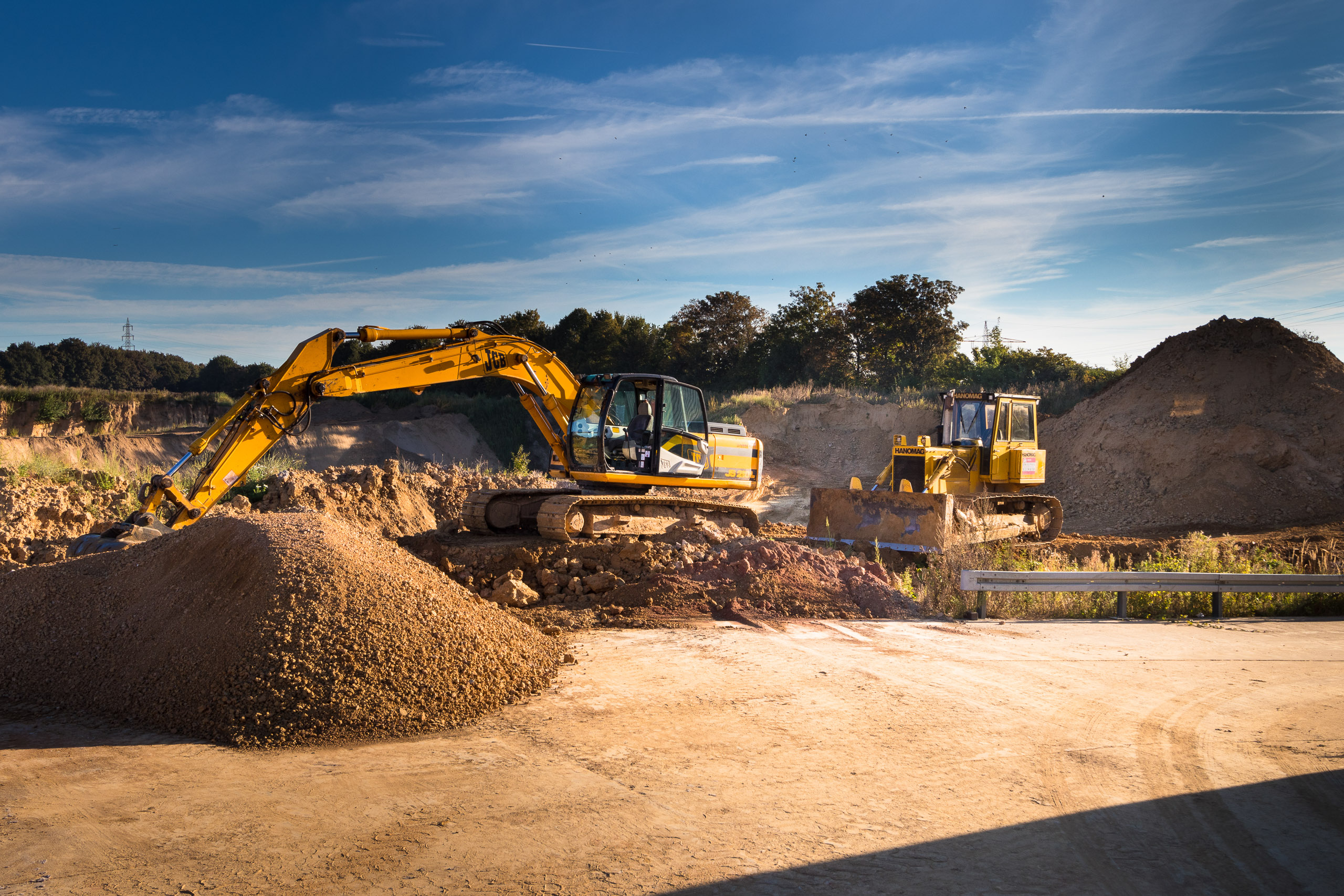
We produce with natural and high-quality raw materials. We can extract and mine the loess clay, which provides the typical brick red, directly next to our production halls in our own pit. In doing so, we strive to minimize the intervention on nature as much as possible.
At the same time, our slow extraction and the resulting clay steep walls create a special and important habitat for rare animal species.
02 Premixing
A variety of different recipes form the basis for various optics and colors that the clinker shows after firing.
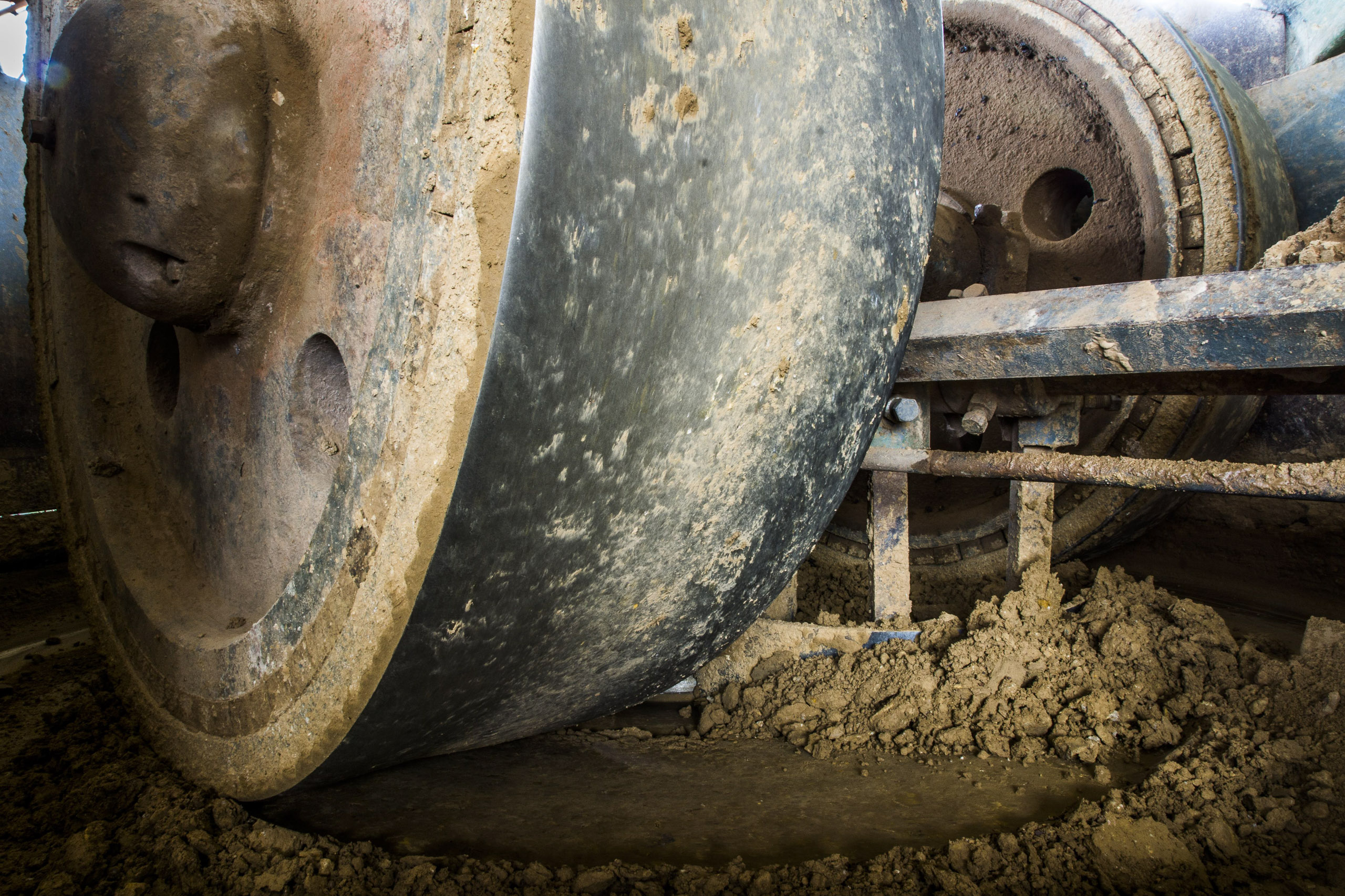
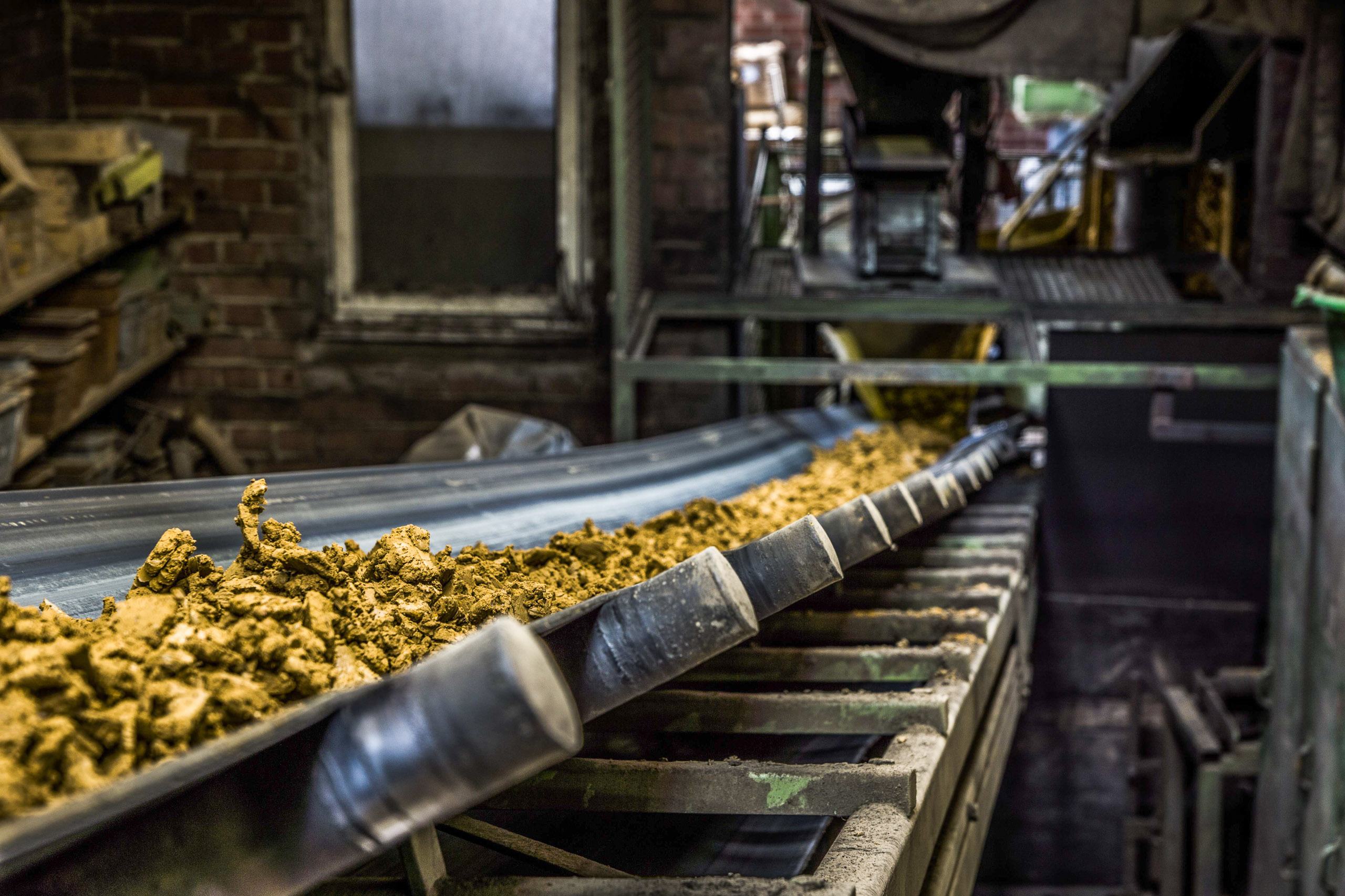
The pre-mixed clay mixture is transported to the roller mill via conveyor belts, which can be thought of as a large coffee grinder.
The clay is crushed and ground by heavy, rotating runners. This is a first stage of homogenizing the clay.
03 Homogenization
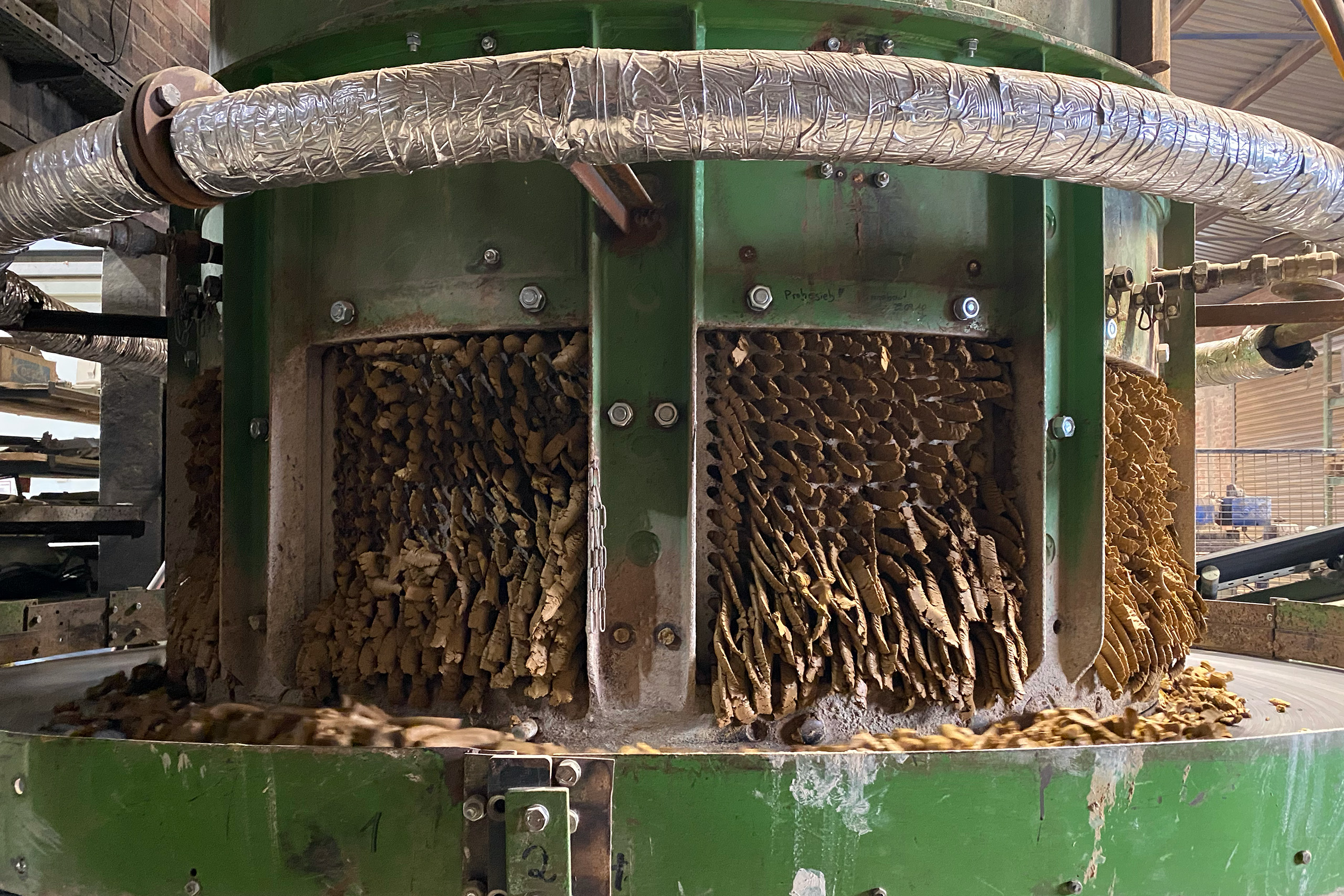
To achieve a homogeneous mass, we add water to the raw materials.
Since water is an important and precious good for us, the water needed in production is collected and, after cleaning through filters and settling basins, reused.
04 Preparation
After the clay has undergone further crushing and homogenization stages, during which the correct moisture setting is achieved by adding water, the fully prepared clay reaches one of the two different shaping units.
05 Processing into Brick Blanks
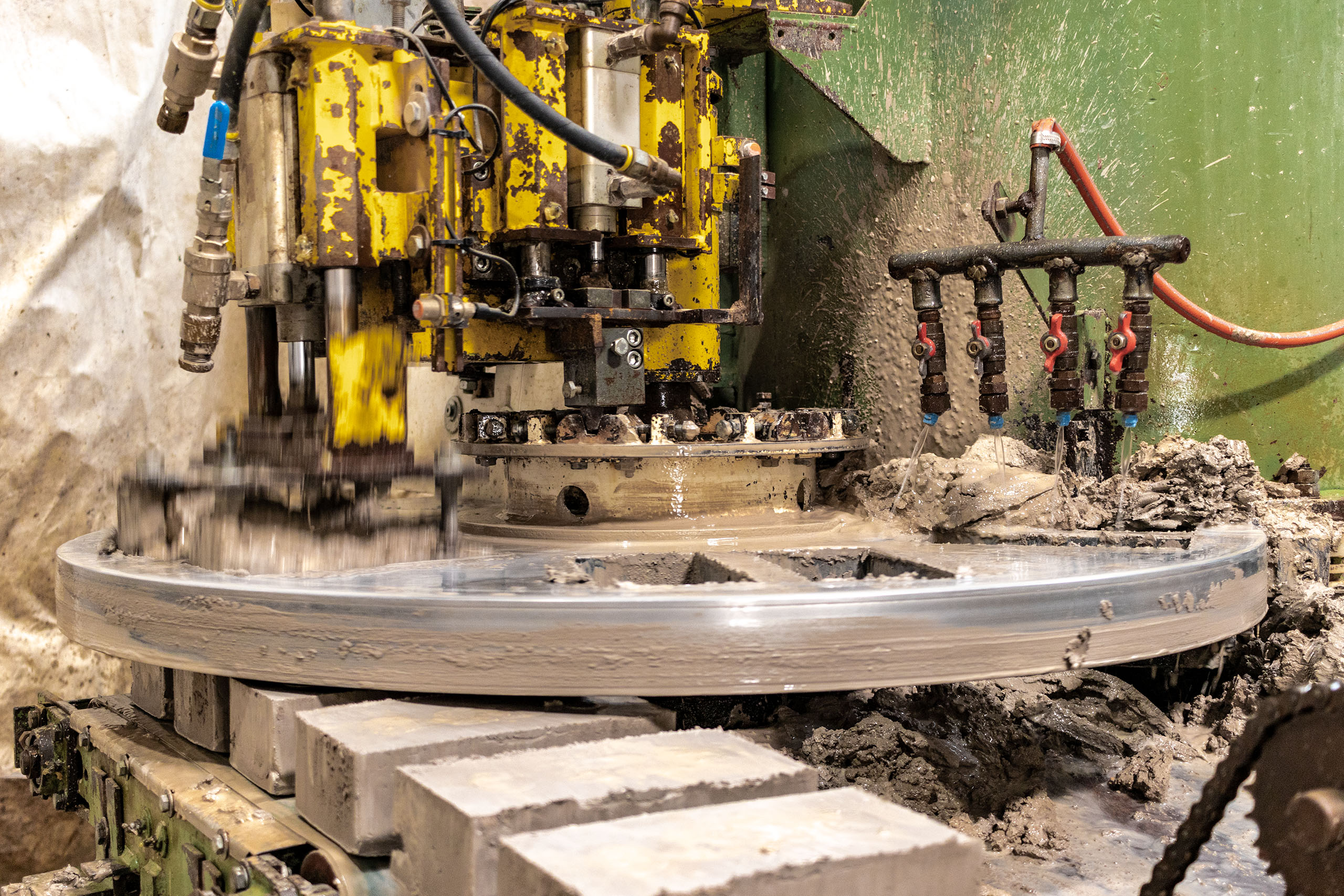
The fully mixed raw material is pressed into brick blanks. This is done either in the extrusion process or in the water strike process.
06 Drying with Furnace Exhaust Air
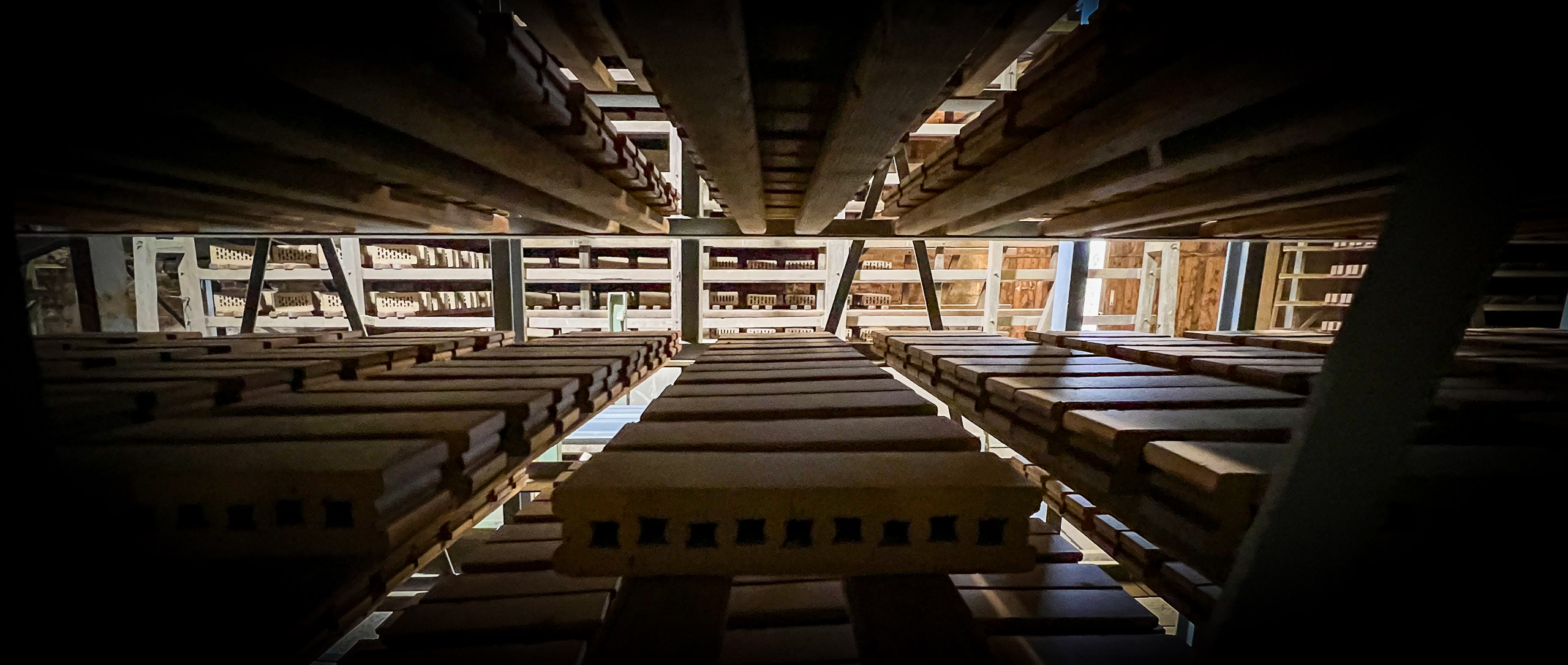
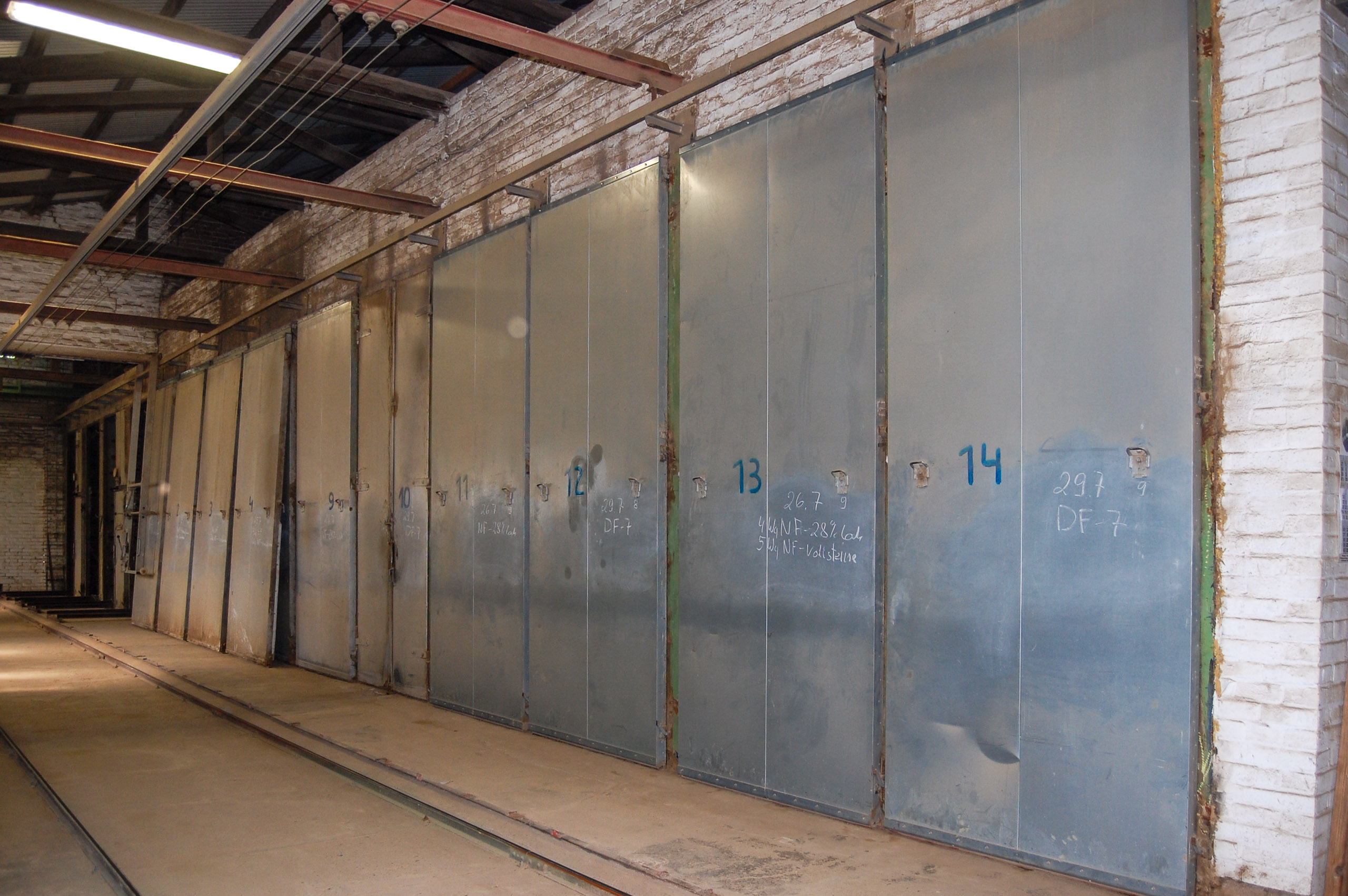
The freshly pressed blanks are larger than the finished stone, as they will shrink due to the withdrawal of water. Part of this process is carried out during the artificial drying of the stones in the drying chambers. The drying is done with exhaust air from the furnace.
07 Insertion of the Blanks
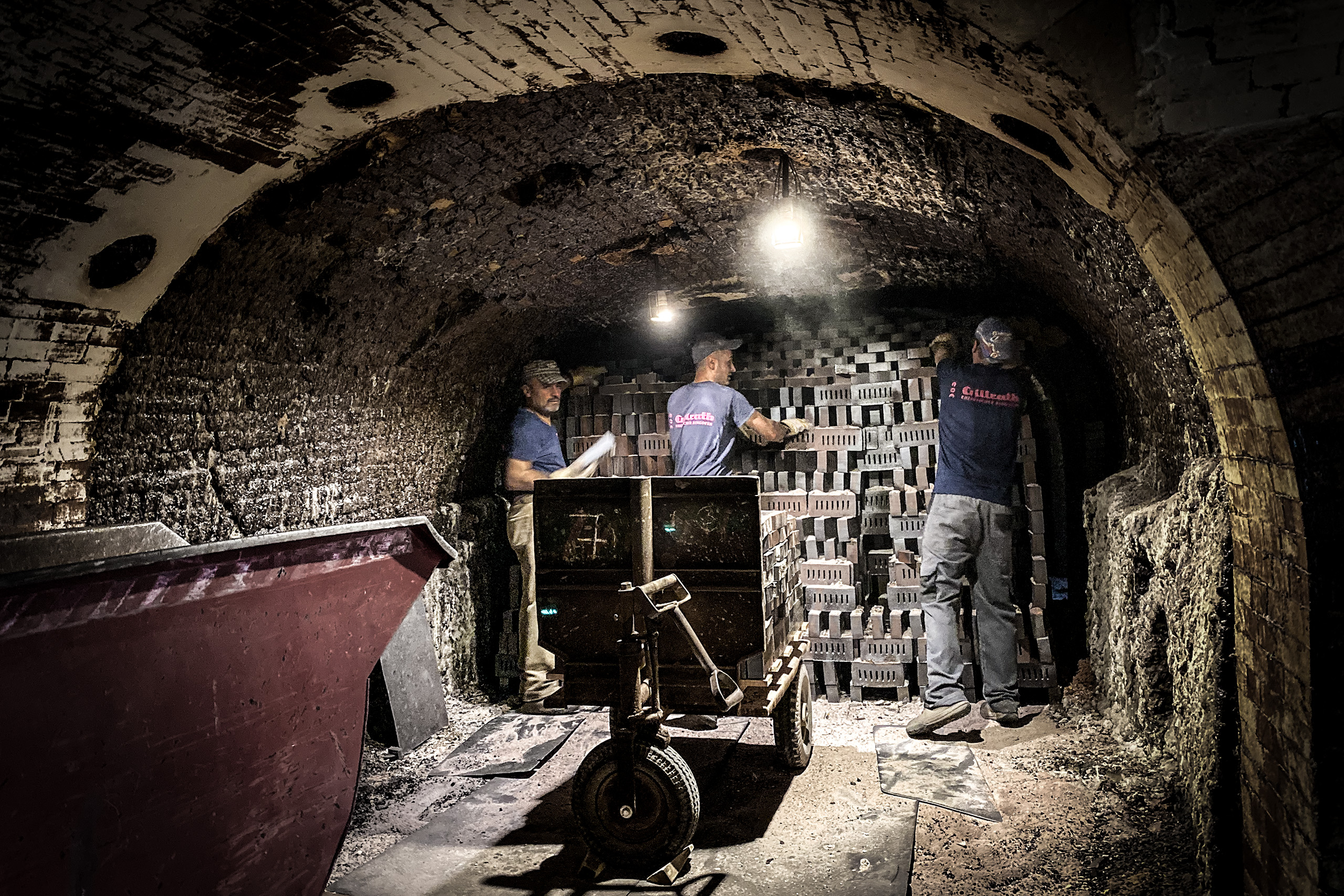
The dried blanks are manually built up in the oven by our experienced employees according to specific setting methods. The setting method and additions during firing determine the individual firing image of the finished clinker.
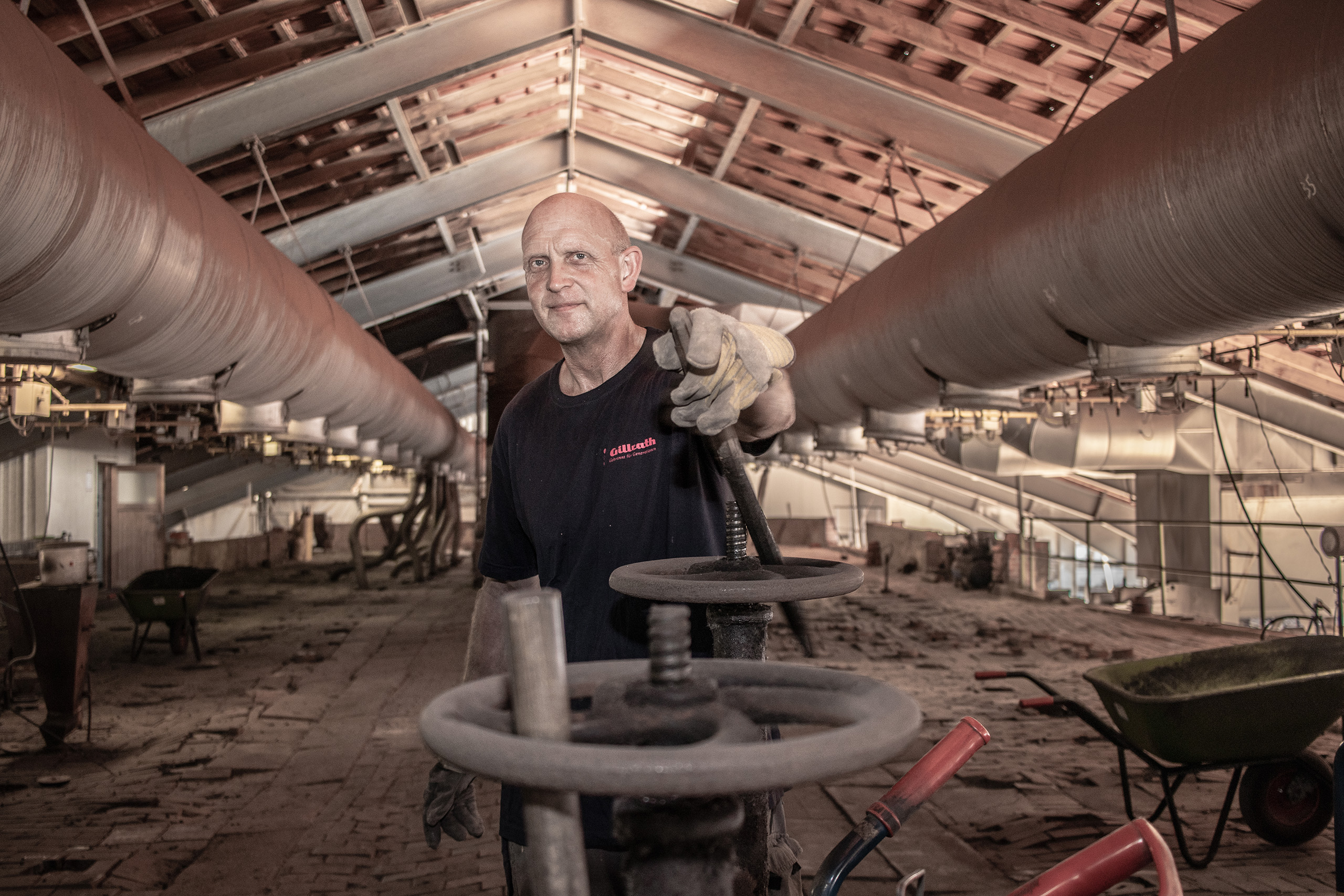
08 Firing Process
After insertion, our firing master closes the furnace doors.
The firing of the clinkers is controlled by our firing master according to our very diverse firing recipes, which have been continuously improved for over 100 years.
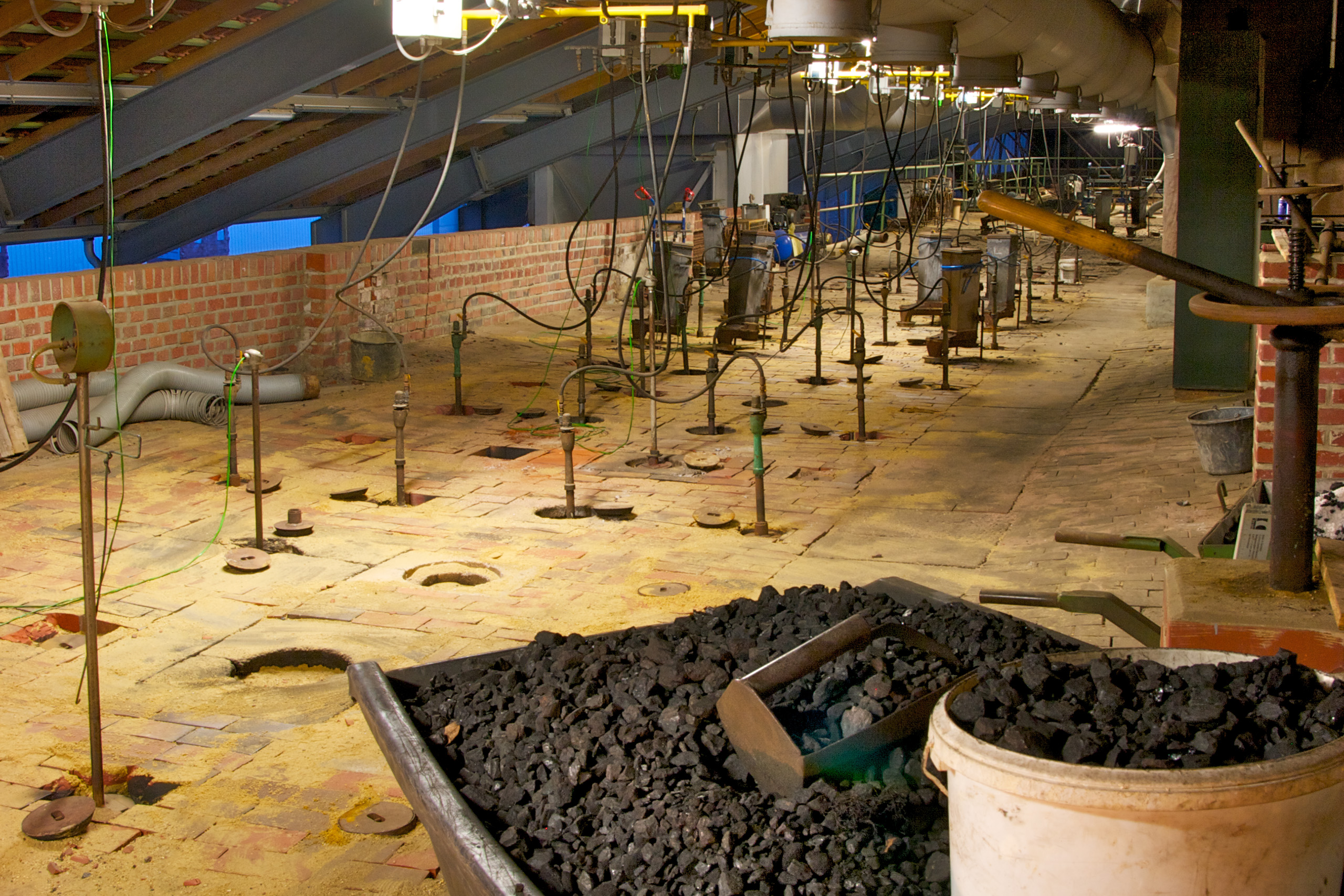
09 Firing
An impressive play of colours and a distinctive haptic of the stones is achieved through the addition of coal and salt during firing, which is expressed in coal firings, coal spots and different variations.
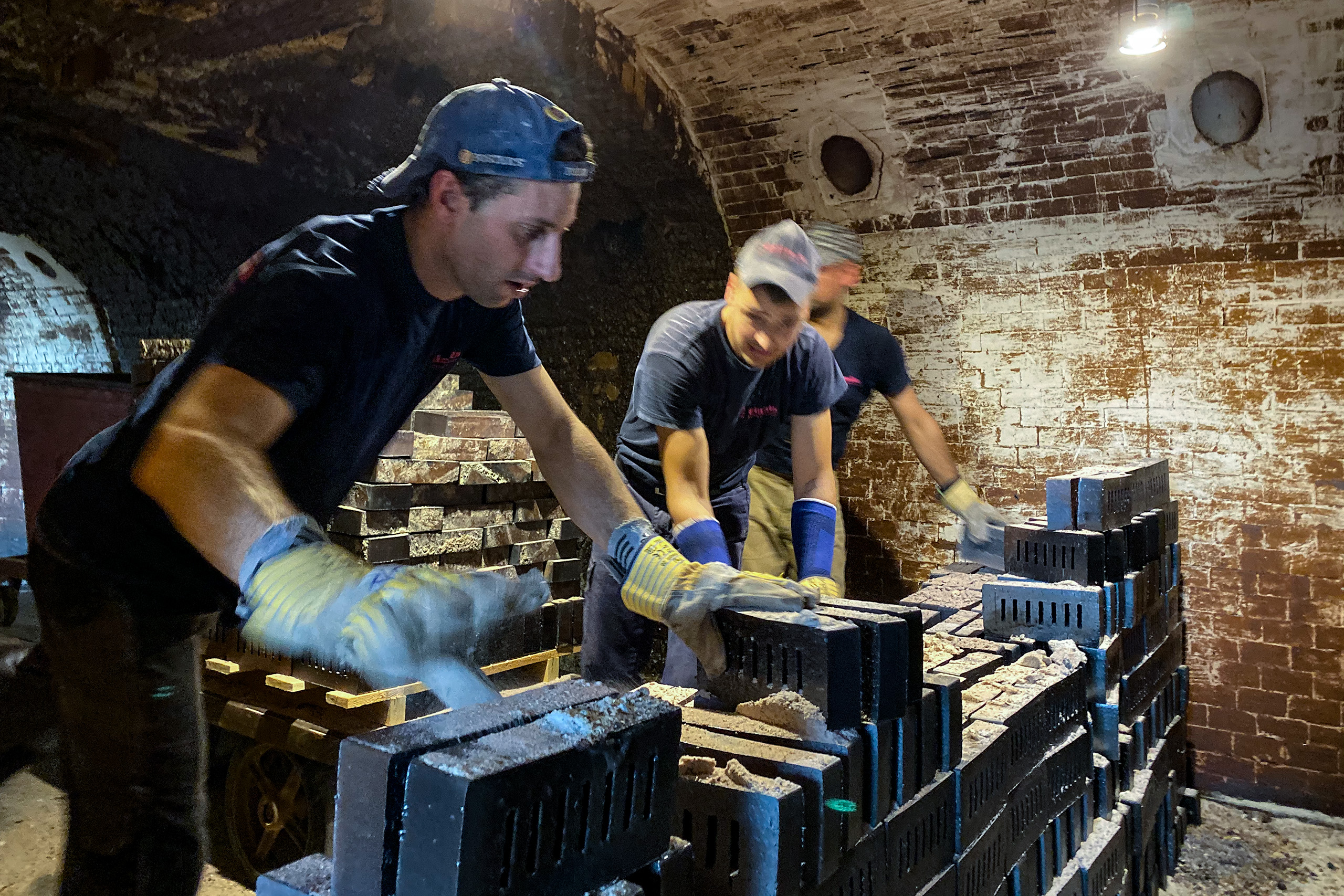
10 After Firing
After the fire has fired the bricks, the oven is opened and ventilated at this point.
In the final step, the fully fired clinkers are again manually removed from the oven and stacked on pallets.
Each clinker is therefore subject to several quality controls.
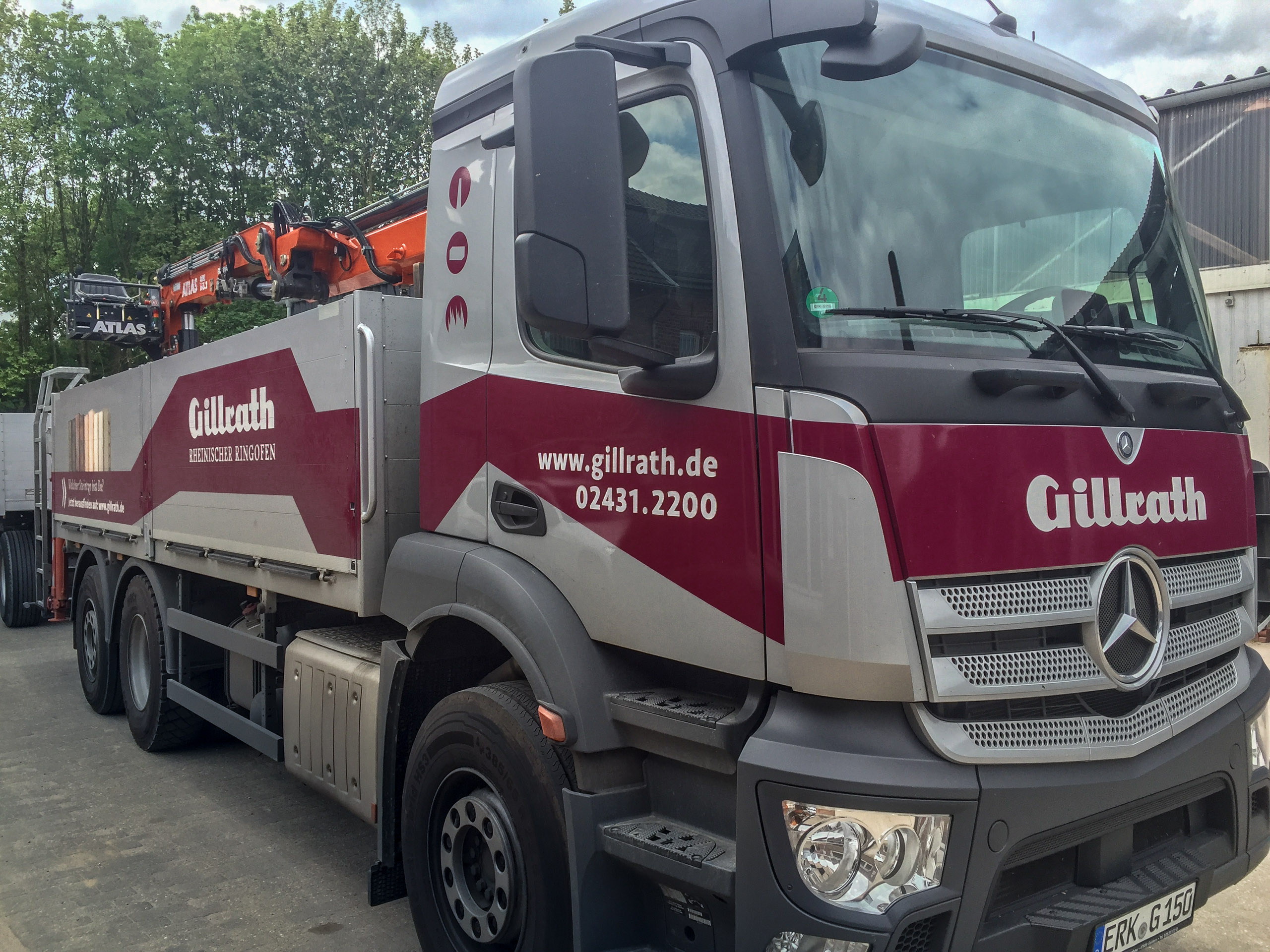
11 Transport to the Construction Site & Processing
Once our clinkers are fired, they are ready to be transported to the construction site.
Learn more about the processing of our clinkers and how they can bring new shine to your projects.